Flourished from c. 1600; led by Yamada Nagamasa 1617–1630
The Japanese Village (Baan Yipun) & Yamada Nagamasa Memorial
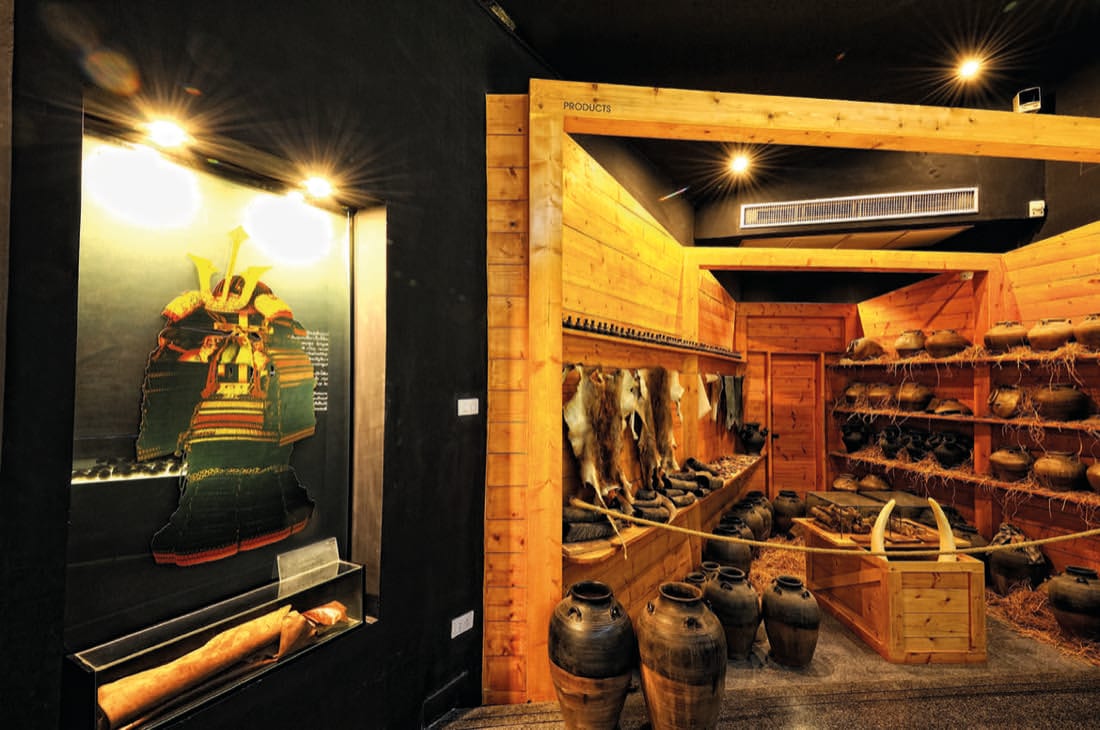
Look to the southern reach of the Chao Phraya — on the bank opposite the Portuguese Settlement and just upstream of Baan Hollanda, the Dutch village — where a riverside memorial park, a Japanese-style museum pavilion and its gardens run right down to the water. On this bank once stood a community of roughly one to fifteen hundred Japanese: traders, Christian converts fleeing Tokugawa-era persecution, and ronin, masterless samurai who had lost at Sekigahara and the Siege of Osaka. From 1617 to 1630 the village was led by Yamada Nagamasa, a samurai adventurer who served King Songtham as a mercenary commander and rose to the noble Siamese rank of Ok-ya Senaphimuk. No original seventeenth-century buildings survive, so it is the setting and the story that hold you rather than standing ruins. These were the muscle and the middlemen of a booming trade that sent Siamese deer hides to Japan by the hundred thousand — in 1624 Yamada himself shipped a cargo of deerskins to Nagasaki, and the Dutch VOC courted him as a key supplier.
Who Lived Here: Merchants, Christian Refugees, and Ronin
From the opening years of the seventeenth century, the Nihonmachi (Japanese quarter) on the bank of the Chao Phraya grew from people who had reached Ayutthaya by very different roads. Estimates place the community at roughly 1,000 to 1,500 Japanese. Some were merchants who arrived aboard the red-seal trading ships; others were Christian converts fleeing the persecutions of the Tokugawa shogunate — by about 1627 some four hundred Japanese Christians are recorded here.
Yet it was the ronin who gave the village its reputation. These masterless samurai had lost their lords at the Battle of Sekigahara (1600) and the Siege of Osaka (1614–15), and many took service with the Siamese crown as a Japanese volunteer corps. Disciplined and feared in battle, they turned a modest riverside settlement into a community that mattered to Ayutthaya in both commerce and arms.
Yamada Nagamasa: From Mercenary to Ok-ya Senaphimuk
Yamada Nagamasa (1590–1630) reached Ayutthaya as a commoner, but his skill in arms and his gift for command carried him upward. Within some fifteen years he rose from the junior rank of Khun to the senior rank of Ok-ya, becoming Ok-ya Senaphimuk — head of the Japanese volunteer corps and leader of the Japanese village. From 1617 he served King Songtham closely as one of his trusted military commanders.
When Songtham died, the kingdom fell into a bitter dispute over the succession. Yamada was drawn into the politics of the court and opposed the rise of the usurper Prasat Thong. He was sent south to govern Nakhon Si Thammarat (Ligor), reportedly accompanied by a body of samurai, and it was there, in 1630, that he met his end. He is said to have been poisoned at the instigation of Prasat Thong's party — closing the life of one of the age's most remarkable adventurers.
Deer Hides and Red-Seal Ships: The Siam–Japan Trade
At the heart of the village's wealth lay the trade in deer hides. Siam shipped deerskins to Japan by the tens and hundreds of thousands, exchanging them for Japanese silver and fine handicrafts. The commerce moved through the red-seal ship (shuinsen) system licensed by the shogunate, and in 1624 Yamada personally sailed a cargo of Siamese deerskins to Nagasaki.
The village's role as a supplier made it a prize the Dutch East India Company (VOC) both courted and contested. Japan needed hides in quantity for sword fittings, armour, and everyday goods, and so this small community on the Chao Phraya became a vital joint in the East Asian trading network — a place where the interests of the Siamese crown, the Japanese merchants, and the VOC met and competed.
From the River: The Memorial Park Today
No original building from the seventeenth century survives. Ban Yipun stands on the eastern bank of the Chao Phraya, at the southern reach of the island city — opposite the Portuguese Settlement and just upstream of Baan Hollanda, the Dutch village. In place of ruins, the former site is now a tranquil memorial park, with a Japanese-style museum pavilion and gardens that run down to the water's edge.
For a passenger on the river, the view is therefore unlike the soaring prangs and chedis elsewhere in Ayutthaya. Here it is quiet: landscaped gardens, a memorial hall honouring Yamada Nagamasa, and a line of trees mirrored in the current. It is a lesson told through atmosphere rather than stone — a reminder that a cosmopolitan community once flourished at this bend of the river.
Did you know
Did you know? In 1624 Yamada Nagamasa personally sailed a cargo of Siamese deerskins to Nagasaki — one riverbank feeding a trade that shipped hides to Japan by the hundred thousand.
Frequently asked questions
Where was the Japanese Village (Ban Yipun) in Ayutthaya?+
It stood on the eastern bank of the Chao Phraya, toward the southern end of the island city — opposite the Portuguese Settlement and just upstream of Baan Hollanda, the Dutch village. The site is today a memorial park with a museum pavilion and riverside gardens.
Who was Yamada Nagamasa?+
A Japanese samurai adventurer (1590–1630) who headed the Japanese volunteer corps and led the Japanese village from 1617. He served King Songtham and rose to the noble Siamese rank of Ok-ya Senaphimuk, before being sent to govern Nakhon Si Thammarat, where he died in 1630.
How did Yamada Nagamasa die?+
After King Songtham's death, Yamada opposed the usurper Prasat Thong and was sent to Nakhon Si Thammarat, where he died in 1630. He is said to have been poisoned, though the precise circumstances of his death remain debated.
Can you see the Japanese Village from the river?+
Yes. The memorial park and museum pavilion sit on the eastern bank of the Chao Phraya and are visible from the water. No original buildings remain, but the tranquil riverside setting is one of the stops along Mercury Cruise's island-loop route around Ayutthaya.
© Peerapong Prasutr, Wikimedia Commons (CC BY-SA)